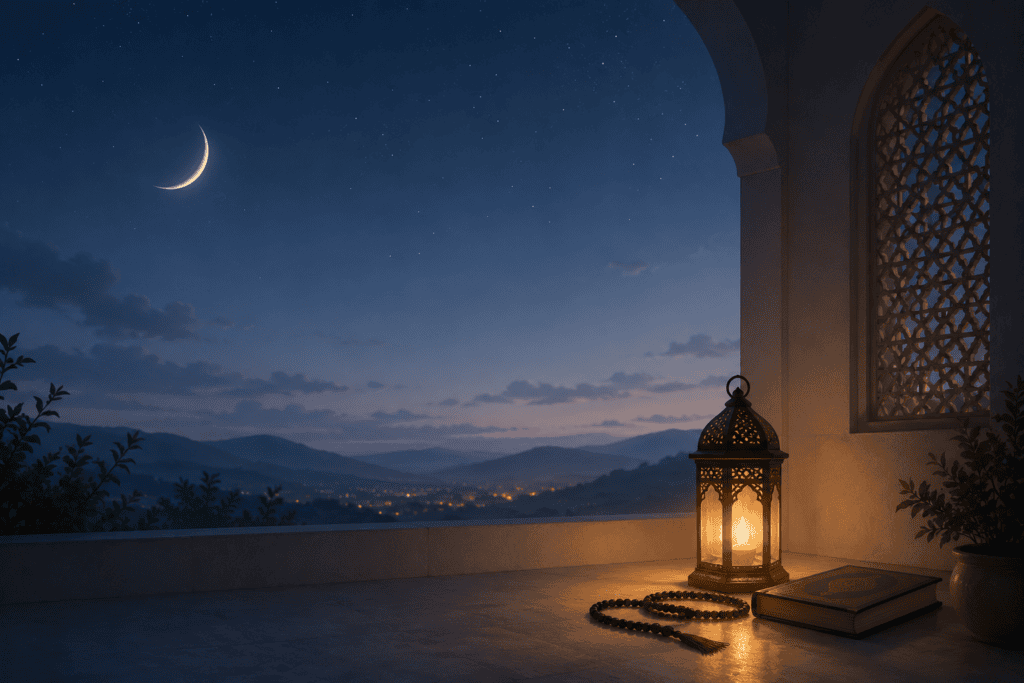
Somewhere in the last ten nights of Ramadan is a single night the Quran describes as better than a thousand months of worship. You won’t get a calendar notification for it. That’s deliberate — and understanding why changes how you approach these final nights.
What the Quran Actually Says
Laylatul Qadr — the Night of Decree, or Night of Power — has its own dedicated chapter in the Quran, Surah Al-Qadr. It states plainly that this night is better than a thousand months (Surah Al-Qadr, 97:3). A thousand months is over 83 years — longer than most people live. One night of sincere worship, on this specific night, is described as outweighing a lifetime of ordinary devotion.
Why the Date Is Hidden
Muslims commonly focus on the odd nights of the last ten — the 21st, 23rd, 25th, 27th, and 29th — with many scholars pointing to the 27th as especially likely, though this isn’t stated with certainty anywhere. The exact night was deliberately not fixed. The wisdom scholars point to is straightforward: if everyone knew exactly which night it was, effort would concentrate on a single evening instead of sustained sincerity across the whole final stretch. Not knowing keeps you showing up, night after night, rather than gambling everything on one calendar guess.
What to Actually Do With It
There’s no complicated checklist. The Prophet ﷺ increased his own worship specifically in the last ten nights beyond what he did the rest of the year — more prayer, more Quran, more dhikr, more seclusion in the mosque (i’tikaf). The same hadith principle we’ve covered before applies here directly too: whoever stands in prayer on Laylatul Qadr out of genuine faith and sincerely seeking reward will have their previous sins forgiven.
Practically, for most people balancing work, family, and daily life, this doesn’t mean staying awake all ten nights in a state of exhaustion. It means genuinely trying across those nights — extra prayer when you can manage it, extra Quran, a sincere few minutes of dua even on a night you’re tired.
The One Dua Worth Memorizing
Aisha (may Allah be pleased with her) once asked the Prophet ﷺ directly: if she knew which night was Laylatul Qadr, what should she say? He told her to say: Allahumma innaka ‘afuwwun tuhibbul-‘afwa fa’fu ‘anni — “O Allah, You are Most Forgiving, and You love forgiveness, so forgive me” (Jami’ at-Tirmidhi 3513, graded hasan sahih; also Sunan Ibn Majah 3850).
Notice what the Prophet ﷺ didn’t tell her to ask for — not wealth, not worldly success, not even a specific worldly problem solved. Out of everything she could have requested on the single most valuable night of the year, he directed her toward forgiveness. It’s short enough to say sincerely a hundred times over a long night, which is exactly the point — simplicity that holds up under repetition, rather than an elaborate prayer you lose focus on halfway through.
A Simple Way to Approach the Last Ten Nights
- Don’t wait for the “right” night. Show sincere effort across all the odd nights, since you genuinely don’t know which one it is.
- Keep the dua close. Memorize it now, before the nights arrive, so it’s not something you’re fumbling to recall at 2 AM.
- Pace yourself. Ten nights of forced, exhausted worship helps no one. Sustainable sincerity beats one unsustainable burst.
A Note Before You Go
Scholarly opinion genuinely varies on which specific night is most likely, and this article deliberately didn’t pick one as definitive. What’s agreed upon by essentially everyone is that it falls within the last ten nights, on one of the odd ones — that’s the part worth building your effort around.