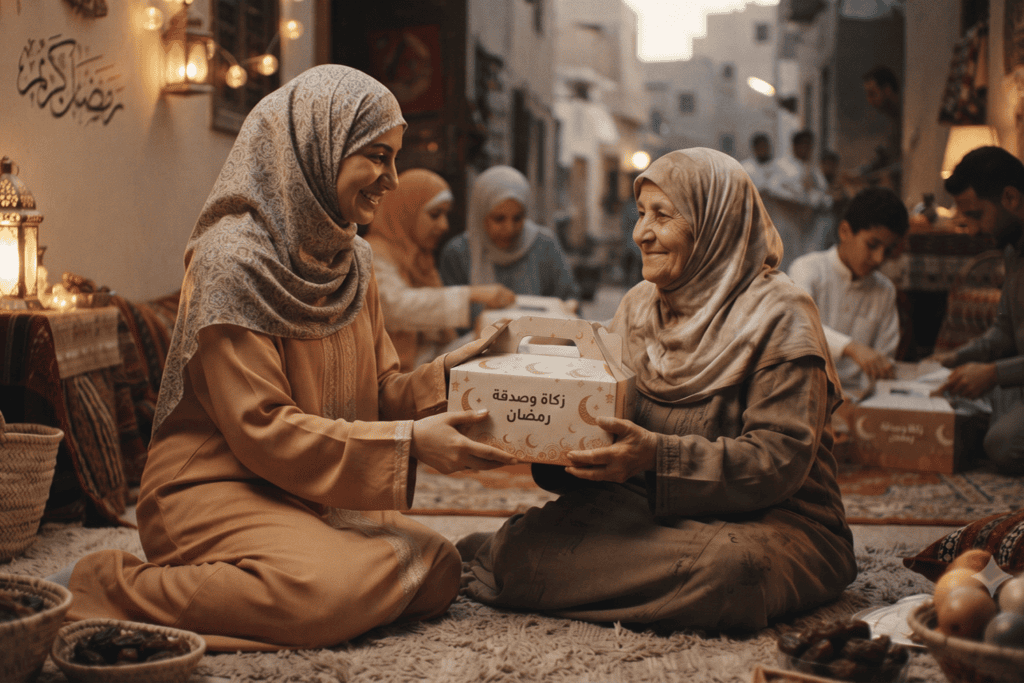
Zakat and Charity in Ramadan: What’s Obligatory, What’s Recommended
Ramadan and generosity are so closely linked that it’s easy to blur two genuinely different things together: Zakat al-Fitr, which is obligatory, and general charity (sadaqah), which is deeply encouraged but voluntary. Knowing the difference actually matters — one has real rules attached, the other is open-ended generosity. Here’s both, kept simple.
The Prophet’s Own Example
Before the rules, it’s worth knowing the spirit behind them. Ibn Abbas described the Prophet ﷺ as the most generous of people, and even more generous in Ramadan than at any other time — more generous, in his companion’s words, than a fast-blowing wind (Sahih al-Bukhari 1902, Sahih Muslim 2308 — agreed upon). That image is deliberate: a fast wind touches everything in its path, holds nothing back, and moves on without expecting anything in return. That’s the standard being described — not a specific dollar amount, a feeling.
Zakat al-Fitr: The One That’s Obligatory
Zakat al-Fitr is a specific, obligatory charity tied to Ramadan itself — separate from your annual Zakat al-Maal (wealth-based zakat), which follows its own yearly calculation and isn’t tied to this month specifically.
Who it’s on: Ibn Umar reported that the Prophet ﷺ made this obligatory on every Muslim — young or old, male or female, free or enslaved (Sahih al-Bukhari 1503, Sahih Muslim 984). In practice today, this means the head of a household pays it on behalf of everyone they support, including children.
When it’s due: It becomes obligatory at sunset on the last day of Ramadan, and the sunnah is to pay it before the Eid prayer — not after. Ibn Umar’s household would typically pay it a day or two early (Sahih al-Bukhari, narrated by Nafi’).
How much: Traditionally, one sa’ (roughly 2.5–3 kg) of a staple food — dates, barley, or your local staple. Many scholars today permit paying the cash equivalent instead, since it’s often more practical for both the giver and the person receiving it; this is a point of genuine, respected difference among scholars, so if your local mosque or community has a set practice, following that is a reasonable approach.
Why it exists: the Prophet ﷺ explained its purpose directly — as a purification for the fasting person from any careless speech or behavior during the month, and as food for the needy (reported by Abu Dawud, Ibn Majah). It’s not just a transaction; it’s built into how Ramadan is meant to close.
Sadaqah: Open, Voluntary, Multiplied
Beyond the Zakat al-Fitr, ordinary charity throughout Ramadan carries no fixed amount, no specific deadline, and no obligation — but it’s where the Prophet’s ﷺ own example of extraordinary generosity really applies. Every good deed is already multiplied in reward, and many scholars note this multiplication is heightened further during Ramadan specifically.
This doesn’t need to be large. It can be:
- Feeding someone breaking their fast (a separate, specific reward in itself — see the fasting-basics article for the hadith on this)
- A small, regular amount given consistently through the month rather than one large sum at the end
- Time and effort, not just money — checking on someone who’s struggling, or helping a neighbor
A Simple Way to Plan This
- Work out your Zakat al-Fitr amount early — for yourself and everyone you support — so it’s ready well before Eid, not a last-minute scramble.
- Set a modest, sustainable sadaqah habit for the month, even if it’s small, rather than one large gesture you might not follow through on.
- Give some of it, if you can, in ways that also build connection — a shared iftar, a direct gift to someone you know is struggling — not only through anonymous transfers.
A Note Before You Go
Zakat al-Fitr calculation can get more specific depending on your local staple food, currency, and personal circumstances (for example, unborn children, or complex household situations). This article covers the general, widely-agreed principles — for your exact calculation, a local scholar or your mosque’s guidance will serve you better than any general article, including this one.